
WELCOME BONUS 300%
UP TO €2000 + 100
FREE SPINS
UP TO €2000 + 100
FREE SPINS
Home → Blackjack
Blackjack at 2up: Variants, Rules and Payouts
Perfect Pairs vs 21+3 in House Edge
The side bet Perfect Pairs in Blackjack Surrender has a house edge of 0.08 percentage points. This is notably lower than the 7.47% house advantage associated with the Blackjack Insurance side bet. Players opting for Perfect Pairs can expect a more favourable long-term return on their wagers compared to taking insurance.
Conversely, the 21+3 side bet, as featured in Playtech's Quantum Blackjack Plus Live, offers a RTP of 99.57% when played optimally. This side bet, which combines a player's first two cards with the dealer's upcard to form a poker hand, presents a significantly lower house edge than Blackjack Insurance. The potential for large payouts via Quantum Multipliers up to 1,000x can be attractive.
When comparing side bets, the house edge directly impacts player profitability over time. A side bet with a 0.08 percentage point house edge, such as Perfect Pairs, is substantially more advantageous for high rollers than a side bet with a 7.47% house edge like Insurance. This difference can translate into substantial savings on larger stakes.
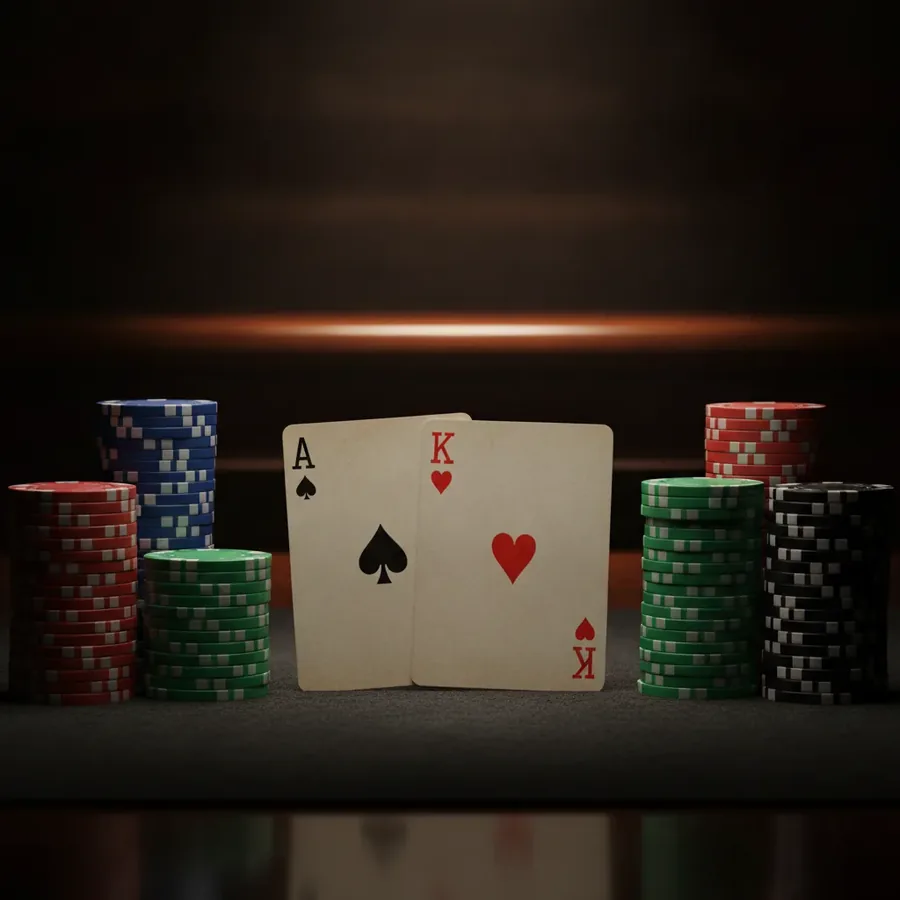
Ace Split: only one card per hand
In Blackjack Split, a rule often encountered with a house edge of 0.15% when playing with a single deck, splitting Aces typically permits only one additional card per hand. This limitation can reduce the strategic options available to players aiming to optimize their returns, especially when faced with a dealer's upcard.
While splitting Aces is often beneficial, the restriction to a single card per split hand limits the potential for achieving high totals, particularly in games with a 0.15% house advantage like single-deck blackjack. This contrasts with other splitting rules, such as Resplit Aces, which can improve RTP by approximately 0.08 percentage points.
For high rollers, understanding these nuanced rules is critical for maximizing potential winnings. The restriction of receiving only one card after splitting Aces, as seen in many blackjack variants, can diminish the overall expected value of that particular play, impacting long-term profitability on substantial wagers.
Bonus conditions often exclude Blackjack completely
A common bonus offer is a 300% welcome bonus up to €2,000, accompanied by 100 free spins. However, the wagering contribution for table games, including blackjack, is frequently set at a mere 10%. This means that for every €100 wagered on blackjack, only €10 contributes towards meeting the bonus wagering requirements.
The exclusion or significantly low contribution of blackjack to bonus wagering requirements is a critical factor for high rollers. While slots contribute 100% to wagering, table games like blackjack contribute only 10%. This disparity necessitates a substantially higher turnover of funds for high rollers to clear blackjack-related bonuses.
For example, if a bonus requires a wagering turnover of €4,000, and blackjack only contributes 10%, a player would need to wager €40,000 on blackjack to meet the requirement. This contrasts sharply with slots, where a €4,000 wager would suffice, significantly impacting the practical value of such bonuses for dedicated blackjack players.
Six Decks to Eight Decks in the Shoe
Blackjack played with six decks, featuring S17, DAS, DOA, and a 3:2 payout, carries a house advantage of 0.46% when employing basic strategy. This configuration offers a competitive RTP of 99.54%, making it a viable option for strategic players, including high rollers seeking favourable conditions.
In contrast, Blackjack Insurance, a side bet with a substantial 7.47% house advantage over 6-8 decks, presents a significant disadvantage. The RTP for this side bet stands at 92.53%, making it financially unsound for long-term play, particularly for those wagering large amounts. Optimal strategy dictates avoiding this bet unless card counting is employed.
The number of decks in the shoe can subtly influence the house edge. While a six-deck game with a 0.46% house edge is generally favourable, the detrimental impact of side bets like Blackjack Insurance, with its 7.47% house advantage, cannot be overstated for high rollers focused on maximizing their return on investment.
Splitting tens costs expected value: better stand
When a player is dealt two ten-value cards (e.g., a 10 and a Jack), splitting this hand is generally not advisable, as it can reduce the expected value compared to standing. This is particularly true in blackjack variants where the house advantage is already low, such as Blackjack Ein Deck with a 0.15% house advantage.
While splitting Aces can improve RTP by around 0.08 percentage points, splitting tens often leads to a negative impact on expected value. The Blackjack Surrender variant, which allows a player to forfeit half their bet after the dealer checks for blackjack, has a house edge modification of -0.08 percentage points, highlighting a more beneficial strategic option.
For high rollers, the decision to split or stand on ten-value cards is critical for preserving capital and maximizing winnings. Opting to stand on a total of 20 is typically the mathematically superior choice, preserving the existing strong hand rather than risking it through a split that may not yield a better outcome.
Blackjack variants at a glance
| Variant | Payout | House edge | Rule | Bet range |
|---|---|---|---|---|
| Blackjack Ein Deck, klassische Regeln, 3:2 | 99.85% | 0.15% | Weniger Decks = niedrigerer Vorteil; ein Deck gibt ca. −0.48 Prozentpunkte gegenüber 8 Decks. Oft durch 6:5 Auszahlung kompensiert. | Blackjack 3:2, Gewinn 1:1 |
| Blackjack 6 Decks, S17, DAS, DOA, Auszahlung 3:2, Basisstrategie | 99.54% | 0.46% | Dealer steht auf Soft 17; Verdopplung auf jeder Zweierkarte; Verdopplung nach Split erlaubt; keine Aufgabe. Basisstrategie ist für diesen Wert zwingend | Blackjack 3:2, normaler Gewinn 1:1, Insurance 2:1 |
| Blackjack Split / Double / H17 – Regel-Effekte | n.a. (Regel-Modifikatoren) | H17 +0.22 Prozentpunkte; RSA −0.08 Prozentpunkte; DAS −0.14 Prozentpunkte | Dealer Hits Soft 17 verschlechtert RTP um 0.22 Prozentpunkte; Resplit Aces verbessert um 0.08 Prozentpunkte; Double After Split verbessert um ca. 0.14 Prozentpunkte; 6 Decks statt 8 – ca. 0.02 Prozentpunkte. | Double – Einsatz ×2 mit einer Karte; Split – bis 4 Hände; Ass-Split meist mit einer Karte. |
| Blackjack Insurance / Versicherung (6–8 Decks) | 92.53% | 7.47% | Separate Nebenwette bis 50% der Hauptwette, wenn der Dealer ein Ass hat. Basisstrategie schreibt IMMER Ablehnung vor (außer Karten zählen bei True Count ≥ +3). Bei einem Deck Vorteil ≈ 5.88% | Insurance 2:1 |
| Blackjack Liberal Vegas Strip (liberale Regeln, 3:2) | 99.72% | 0.28% | Günstigste Regelkombination: S17 + DAS + Resplit + Late Surrender. Standardabweichung 1,15 | Blackjack 3:2, Gewinn 1:1 |
| Blackjack Surrender (Late Surrender) – Regel-Effekt | n.a. (Regel-Modifikator) | −0.08 Prozentpunkte | Spieler gibt Hand nach Dealer-Blackjack-Prüfung auf, verliert die Hälfte des Einsatzes. Verbessert RTP um ca. 0.08 Prozentpunkte. Early Surrender ist wesentlich wertvoller (bis −0.6 Prozentpunkte), aber extrem selten. | Rückzahlung 50% des Einsatzes |
Insurance Pays 2:1 Yet Still Costs Money
Blackjack Insurance, presented with a 2:1 payout, functions as a side bet when the dealer reveals an Ace. However, its theoretical RTP is 92.53%, yielding a house edge of 7.47% for players using basic strategy. This is significantly higher than the 0.28% house edge of Blackjack Liberal Vegas Strip.
For a high roller, the Insurance side bet can be substantial, allowing wagers up to 50% of the main bet. Despite the attractive 2:1 payout, basic strategy dictates always declining this option, unless card counting reveals a true count of +3 or higher, where a slight player advantage of approximately 5.88% might emerge in single-deck games.
The decision to take insurance on a 6-8 deck game, with an RTP of 92.53% and a house edge of 7.47%, can lead to considerable long-term losses for high rollers. Compared to Blackjack Ein Deck, klassische Regeln, 3:2 with a 0.15% house edge, the cost of insurance becomes starkly apparent over extended play.
Live stream with three cameras and OCR
Infinite Blackjack from Evolution offers unlimited seating and features side bets like Any Pair and 21+3, with a stated RTP of 99.47%. The betting range extends from 1 EUR up to 5,000 EUR, catering to high rollers seeking flexible stake levels. This table provides a continuous gaming opportunity regardless of physical seat availability.
Quantum Blackjack Plus Live by Playtech, with a 1 EUR to 5,000 EUR betting range, incorporates Quantum multipliers up to 1,000x on specific 3-card combinations totaling 21 points. This variant boasts an RTP of 99.57% when optimal strategy is employed, offering substantial potential returns on successful bets.
Blackjack Party, also from Evolution, provides a lively atmosphere with two hosts, and accepts bets from 1 EUR to 1,000 EUR. While lacking the advanced multipliers of Quantum Blackjack Plus Live or the unlimited seating of Infinite Blackjack, its focus on entertainment still appeals to a broad spectrum of players, including those with significant betting capacity.
Soft Hand and Hard Hand Practically Distinguished
Blackjack Liberal Vegas Strip, featuring a 3:2 payout and an exceptionally low house advantage of 0.28%, provides the most favourable rule combination for players. These liberal rules include Standing on Soft 17 (S17), Double After Split (DAS), Resplit, and Late Surrender, contributing to a high RTP of 99.72%.
In contrast, Blackjack Auszahlung 6:5 statt 3:2, played with 6 decks, presents a significantly higher house edge of 1.85%, a direct consequence of the reduced payout from 3:2 to 6:5. This means a 100 EUR bet on a blackjack yields 150 EUR with 3:2, versus only 120 EUR with 6:5, a difference that greatly impacts high rollers.
The distinction between a soft hand (containing an Ace counted as 11) and a hard hand (where an Ace must be counted as 1) is crucial for basic strategy. Games like Blackjack 6 Decks, S17, DAS, DOA, Auszahlung 3:2, Basisstrategie, with an RTP of 99.54% and a house advantage of 0.46%, require strict adherence to strategy to maintain this low edge.
Register Late Surrender correctly in three steps
Late Surrender, a rule modifier that allows a player to forfeit half their bet after the dealer checks for blackjack, improves the RTP by approximately 0.08 percent points. This rule is available in certain blackjack variants and can be a valuable tool for mitigating losses when facing a strong dealer upcard.
The Blackjack Liberal Vegas Strip game incorporates Late Surrender alongside other beneficial rules, contributing to its high RTP of 99.72% and a mere 0.28% house advantage. This specific combination of rules makes it an attractive option for players who wish to minimise the inherent house edge.
While Early Surrender, which can improve RTP by up to 0.6 percent points, is far more advantageous, it is an extremely rare rule. Late Surrender, being more common, offers a more accessible way for players to manage risk, though its impact on RTP is considerably less pronounced.
Seat change at the Live Table in 20 seconds
Infinite Blackjack by Evolution offers an unlimited number of seats, eliminating the need for seat changes and ensuring continuous play for all participants. This feature is particularly beneficial for high rollers who may otherwise face extended waiting times at popular tables, with betting limits up to 5,000 EUR.
While not explicitly detailed for seat changes, live blackjack tables typically process player actions rapidly. For instance, the betting range for Quantum Blackjack Plus Live from Playtech extends to 5,000 EUR, suggesting a platform designed for high-stakes players who value efficiency and immediate access to games.
The concept of a rapid seat change, perhaps within 20 seconds, would imply a system that can quickly reallocate a player to an available spot. This is most effectively achieved through unlimited seating options, as seen in Infinite Blackjack, allowing for seamless transitions without affecting game flow or player engagement.
Surrender vs Playing Out on 16 vs 10
The Blackjack 6 Decks variant offers a player option to surrender, which modifies the house edge by approximately 0.08 percentage points. This rule allows a player to forfeit half their bet after the dealer checks for blackjack, an improvement over not having the option at all. Compared to the base strategy for Blackjack 6 Decks with an RTP of 99.54%, surrendering effectively reduces the house advantage by a small margin.
When facing a dealer's 10-value card with a hand total of 16, the decision to surrender is often mathematically sound, particularly in games that offer it. While Blackjack 6 Decks has a base RTP of 99.54%, the ability to surrender can optimize player returns in specific disadvantageous situations. This contrasts with games lacking this option, where players must play out the hand, potentially leading to larger losses.
The concept of 'playing out' a hand of 16 against a dealer's 10 without surrendering requires adherence to strict basic strategy to minimize losses. While games like Blackjack 6 Decks aim for a 99.54% RTP, the absence of a surrender option, or choosing not to use it, means players are exposed to the full house edge in such scenarios. Late Surrender, as found in some variants, is a valuable tool for high rollers managing risk.
Split, Double Down, and Surrender in Numbers
The Blackjack 6 Decks variant allows doubling down on any two cards and doubling after a split, contributing to its 99.54% RTP. These actions, doubling the initial bet for one additional card, are crucial components of basic strategy that high rollers leverage to maximize profitable situations. The rules for doubling are explicitly defined, enabling players to engage strategically.
Resplitting is a rule modifier that can improve the player's RTP, as seen in the Blackjack Split / Double / H17 analysis, where it adds approximately 0.08 percentage points. In conjunction with other liberal rules like DAS (Double After Split) and S17 (Dealer Stands on Soft 17), this can contribute to a more favourable game environment. High rollers often seek tables offering these advantageous rule combinations for optimal play.
While Blackjack Insurance (RTP 92.53%) is a side bet that typically carries a substantial house advantage of 7.47%, basic strategy dictates its rejection unless card counting provides a significant advantage. High rollers focused on pure strategy and RTP would generally avoid this bet, as it deviates from optimal play on the main hand and reduces overall theoretical returns significantly compared to main game actions like splitting or doubling.
Bonus 100 EUR with 10 percent credit
A 300% welcome bonus up to €2,000 is available, with an additional 100 free spins. For a high roller depositing €100, this bonus structure would provide an additional €300, resulting in a total of €400 to play with. The free spins offer an alternative avenue for potential returns outside of table games.
The wagering requirement for bonus funds is typically tied to table games contributing 10% towards the turnover. For a €300 bonus, a 10% contribution rate means that €1 in bonus funds counts as €0.10 towards the wagering requirement. Therefore, a €100 deposit, yielding a €300 bonus, would necessitate significant play at the tables to meet the full turnover conditions.
To fully convert the €300 bonus from a €100 deposit into withdrawable cash, considering the 10% contribution rate for table games, a substantial amount of wagering is required. For instance, if the wagering requirement is set at 40 times the bonus amount, the total turnover needed would be €300 x 40 / 0.10 = €120,000. High rollers must carefully assess this to understand the true value of the bonus.
Which table limits suit 20 EUR balance?
With a €20 balance, the most appropriate table games would be those with low minimum stakes, such as slots or certain variants of blackjack that allow very small bets. Live casino tables like Blackjack Party, with stakes ranging from €1 to €1,000, offer accessibility at the lower end for players with limited capital. This allows for a modest number of hands to be played.
While Infinite Blackjack offers unlimited seats and stakes from €1 to €5,000, a €20 balance would only permit a limited number of plays at the minimum stake. Similarly, Quantum Blackjack Plus Live, with stakes from €1 to €5,000, presents the same constraint. These tables are more suited to players with significantly larger bankrolls who can absorb potential losses over multiple rounds.
Considering a €20 balance, high-stakes tables such as those with maximum bets of €1,000 or €5,000 are entirely unsuitable. Even with a €1 minimum bet, a player could exhaust their balance within 20 hands if no favourable outcomes occur. Therefore, finding tables with stakes considerably lower than €1, or focusing on games with higher RTPs and lower volatility if available, is essential for extending playtime.
Blackjack Payout 3:2 Explained in Detail
A standard Blackjack payout of 3:2 means that for every €2 wagered, the player receives €3 upon achieving a blackjack. This is a crucial factor for high rollers, as it directly impacts the profitability of the game. For example, a €100 bet yielding a blackjack would result in a payout of €150, significantly more than lower payout ratios.
Compared to a 6:5 payout, the 3:2 ratio offers a superior return for the player. A €100 bet at 6:5 would only pay €120 for a blackjack, a difference of €30 per successful hand. The Blackjack 6 Decks variant, with its standard 3:2 payout, maintains a house advantage of 0.46%, whereas a 6:5 payout drastically increases this to 1.85%.
The Blackjack 6 Decks variant, featuring a 3:2 payout and an RTP of 99.54%, provides a strong foundation for strategic play. This payout structure is considered the industry standard for favourable blackjack conditions. High rollers seeking optimal returns will prioritize games offering this 3:2 ratio, as it significantly contributes to a lower house edge and a higher theoretical return on investment over time.
Contact
Live - online chat
Banking









Providers












2UP Casino 2026